
Knee Pain Symptoms
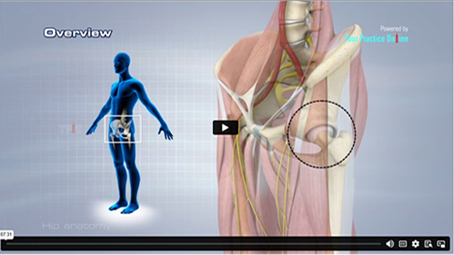
The knee is one of the largest and most stressed joints in the body. It’s formed by the femur (thighbone), tibia (shinbone), and patella (kneecap). Strong ligaments and muscles stabilize the joint, while meniscus cartilage acts like a shock absorber to cushion movement. When any of these structures become irritated, worn down, or injured, pain, swelling, and instability can follow occur.
Knee pain isn’t always “just soreness.” It often comes with signs that point to an underlying issue, including:
- Pain with walking, stairs, kneeling, or squatting
- Swelling, stiffness, or warmth around the joint
- Clicking, catching, locking, or giving way
- Pain behind the kneecap or along the joint line
- Reduced range of motion or trouble fully straightening the knee
- Pain that worsens at night or after activity
If knee pain is persistent, recurring, or limiting what you can do, it’s time to visit a knee specialist for diagnosis and treatment. Schedule knee consult.
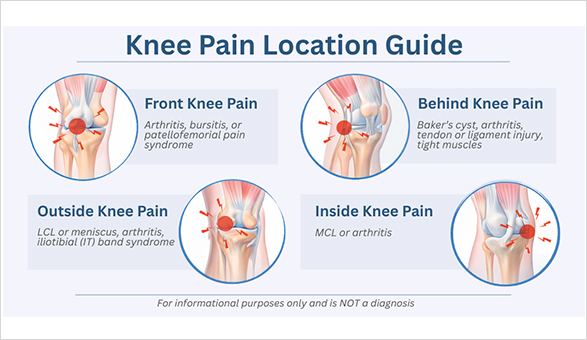
Knee Pain Location Chart
Where you feel knee pain can be an indicator to what’s causing it. This chart highlights common pain locations and the issues most often linked to them:
- Front of the knee: Arthritis, bursitis, or patellofemoral pain syndrome
- Back of the knee: Tendon or ligament injuries, arthritis, a Baker’s cyst, or tight leg muscles
- Inside (medial) knee: MCL injury or arthritis
- Outside (lateral) knee: LCL injury, meniscus injury, arthritis, or IT band syndrome
Because every knee (and every injury) is different, this is only a guide—not a diagnosis.
What Causes Knee Pain?
Knee pain can happen suddenly after an injury or build gradually over time. Common causes include:
Knee Arthritis
Chronic knee pain, stiffness, or swelling caused by cartilage wear or inflammation. Early treatment can help reduce pain and protect joint function.
Meniscus Tears
Injury to the knee’s shock-absorbing cartilage, often causing pain with twisting, clicking, or locking. Common in athletes and active adults.
Ligament Injuries
(ACL, MCL, PCL, LCL)Runner’s Knee (Patellofemoral Pain Syndrome)
Pain around or behind the kneecap caused by overuse, poor tracking, or muscle imbalance. Often worsens with stairs or prolonged sitting.
Patellar Tendonitis
Inflammation of the tendon connecting the kneecap to the shinbone, frequently seen in runners, jumpers, and active individuals.
Knee Sprain, Fracture, Dislocation,
or Overuse Injuries- Knee Sprain
- Knee Fracture
- Knee Dislocation
- Knee Overuse
Injuries
These are some of the most common causes of knee pain, but they are not the only ones. Explore knee conditions
How We Diagnose Knee Pain
A precise diagnosis is the fastest path to the right treatment. Your visit may include:
- A detailed discussion of symptoms, activity level, and injury history
- A targeted knee exam (stability, motion, strength, alignment)
- Imaging when appropriate, such as X-rays or MRI
- Additional testing if needed to evaluate inflammation, infection, or gout
Knee Pain Treatment Options
Most patients start with non-surgical care—and many improve without surgery. Your plan may include:
Non-Surgical Treatments
- Activity modification and a guided return to movement
- Physical therapy to restore strength, balance, and stability
- Anti-inflammatory medication when appropriate
- Bracing or supportive devices
- Injections (including cortisone and other options when indicated)
Minimally Invasive & Surgical Treatments We Offer
If conservative treatment isn’t enough, we offer a full spectrum of knee procedures based on your diagnosis, goals, and the severity of joint damage:
Knee Arthroscopy
A minimally invasive procedure used to diagnose and treat meniscus, cartilage, and certain ligament injuries using small incisions and a camera-guided approach.
Partial Knee Replacement
A joint-preserving surgical option for patients with arthritis limited to one area of the knee, helping relieve pain while maintaining more natural knee movement.
Minimally Invasive Total Knee Replacement
An advanced surgical solution for severe knee arthritis that replaces the damaged joint while minimizing tissue disruption to support...
Not sure which treatment is right for you? Explore our knee treatment page and schedule a consultation. Regardless of the condition or treatment plan, our goal stays the same, to reduce pain, restore function, and help you return to the activities you enjoy.
When to See an Orthopedic Knee Specialist
Call for evaluation right away if you have:
- Trouble walking or bearing weight
- Significant swelling, warmth, redness, or fever
- A visible deformity after an injury
- Locking, instability, or inability to bend/straighten the knee
- Pain that lasts more than a few days, keeps returning, or worsens at night
If knee arthritis is advanced and conservative care isn’t helping, a consultation with a knee replacement surgeon can help you understand whether partial or total knee replacement is appropriate—and what recovery might look like.
Get Expert Knee Care in Virginia Beach
Don’t let knee pain limit your routine or keep you from the activities you love. The right diagnosis—and the right plan—can make all the difference.
Schedule an appointment online, or call to get the expert care you deserve.
- Request an Appointment
- Call Now: (757) 490-4802
Frequently Asked Questions about Knee Pain and Care (FAQ’s)
What are the most common symptoms of knee pain?
Swelling, stiffness, clicking/catching, instability, limited motion, or pain with stairs/walking/night.
What are the most common causes of knee pain?
Arthritis, meniscus tears, ligament sprains (ACL/MCL), tendonitis, bursitis, and kneecap cartilage irritation.
When should I see a knee specialist?
If pain lasts more than a few days, affects walking or sleep, keeps returning, or follows an injury with swelling/locking.
How do you diagnose knee pain?
A focused exam plus X-rays or MRI when needed to confirm arthritis, meniscus, ligament, or cartilage injury.
What are non-surgical treatments for knee pain?
Physical therapy, activity changes, medication when appropriate, bracing, and injections if indicated.
Book online or call to schedule an evaluation.