
Hip Conditions
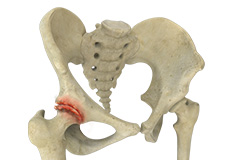
Osteoarthritis of the Hip
Osteoarthritis, also called degenerative joint disease, is the most common form of arthritis. It occurs most often in older people. This disease affects the tissue covering the ends of bones in a joint (cartilage). In a person with osteoarthritis, the cartilage becomes damaged and worn out causing pain, swelling, stiffness and restricted movement in the affected joint. Although osteoarthritis may affect various joints including hips, knees, hands, and spine, hip joint is most commonly affected.
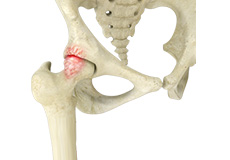
Femoroacetabular Impingement
Femoroacetabular impingement (FAI) is a condition where there is too much friction in the hip joint from bony irregularities causing pain and decreased range of hip motion.
The femoral head and acetabulum rub against each other creating damage and pain to the hip joint.
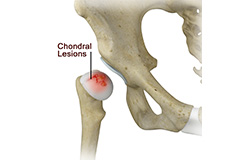
Chondral Lesions or Injuries
A chondral injury refers to an injury of the articular cartilage covering the joint.
Chondral injuries can result from various hip conditions such as labral tears, loose bodies, posterior dislocation, slipped capital femoral epiphysis (SCFE), dysplasia, osteonecrosis, and degenerative arthritis.
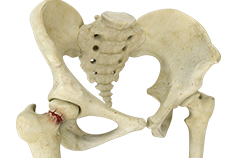
Hip Fracture
The hip joint is a “ball and socket” joint. The “ball” is the head of the femur, or thighbone, and the “socket” is the cup shaped acetabulum. The joint surface is covered by a smooth articular surface that allows pain free movement in the joint.
Hip fracture is a break that occurs near the hip in the upper part of the femur or thighbone. The thighbone has two bony processes on the upper part - the greater and lesser trochanters
Hip Dislocation
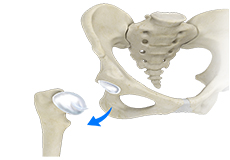
The hip joint is a ball and socket joint. The “ball” is the head of the femur, or thighbone, and the “socket” is the cup shaped acetabulum. The joint is surrounded by muscles, ligaments, and tendons that support and hold the bones of the joint in place. Hip dislocation occurs when the head of the femur moves out of the socket. The femoral head can dislocate either backward (posterior dislocation) or forward (anterior dislocation).
Labral Tears of the Hip
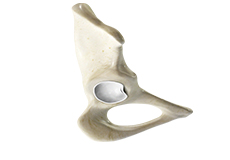
A hip labral tear is an injury to the labrum, the cartilage that surrounds the outside rim of your hip joint socket.
A tear in the labrum of the hip can result from:
Traumatic injury, such as a motor vehicle accident or from participating in sports such as football, soccer, basketball and snow skiing
Avascular Necrosis
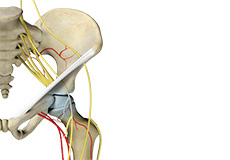
Avascular necrosis, also called osteonecrosis, is a condition in which bone death occurs because of inadequate blood supply to it. Lack of blood flow may occur when there is a fracture in the bone or a joint dislocation that may damage nearby blood vessels. Hip joint is most commonly affected; however, the knee and shoulder may also be involved.