
Hip Pain Symptoms
Hip pain can come from several parts of the hip joint and the tissues around it. The hip is a ball-and-socket joint where the femoral head (ball) fits into the acetabulum (socket) of the pelvis, and it relies on muscles, tendons, ligaments, and cartilage to move smoothly and support your body weight. When any of these structures become irritated, injured, inflamed, or worn down, pain, inflammation and swelling can occur.
Hip pain isn’t always “just soreness.” It often comes with signs that point to an underlying issue, including:
- Groin pain or pain on the outside of the hip
- Stiffness, tightness, or trouble getting moving
- Clicking, catching, or snapping with movement
- Weakness or a feeling of instability
- Pain with walking, stairs, standing, or getting in/out of a car
- Reduced range of motion or trouble bending/crossing your leg
- Pain that worsens after activity or with prolonged sitting
If hip pain is persistent, recurring, or limiting what you can do, it’s time to visit a hip specialist for diagnosis and treatment. Schedule a hip consultation.
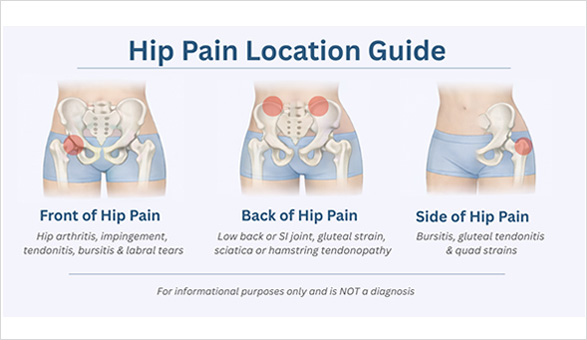
Where It Hurts?
Where you feel hip pain can be a clue to what may be causing it. This chart highlights common pain locations and the issues most often linked to them:
- Front of the hip (groin/anterior hip): Hip arthritis, hip impingement (FAI), labral tear, hip flexor strain/tendonitis, or joint inflammation
- Back of the hip (buttock/posterior hip): Low back or SI joint pain, gluteal strain, sciatica, hamstring tendinopathy, or deep muscle irritation
- Side of the hip (outer/lateral hip): Bursitis (greater trochanteric pain syndrome), gluteal tendinopathy, IT band irritation, or abductor muscle strain
Because every hip (and every injury) is different, this is only a guide–not a diagnosis.
Common Hip Conditions We Treat
Hip pain can develop gradually or suddenly, depending on the underlying cause. Our team diagnoses and treats a full spectrum of hip problems, including:
Hip Arthritis (Osteoarthritis)
A wear-and-tear condition where hip cartilage breaks down, causing pain, stiffness, and reduced motion.
Labral Tears
A tear in the cartilage ring around the hip socket that can cause groin pain, clicking, catching, and instability.
Chondral Legions & Injuries
A break in the upper femur near the hip joint, often causing severe pain and difficulty standing or walking.
Hip Fracture
A break in the upper femur near the hip joint, often causing severe pain and difficulty standing or walking.
Hip Dislocation
When the ball of the hip joint is forced out of the socket, it can cause severe pain and inability to move the leg normally.
Femoroacetabular Impingement
A condition where the hip bones rub abnormally, leading to pain, stiffness, and limited range of motion.
Hip Bursitis
Hip bursitis is inflammation of a cushioning sac near the outer hip (greater trochanter), often causing side hip pain.
Avascular Necrosis
A condition caused by loss of blood supply to the hip bone, which can lead to pain, bone collapse, and arthritis.
These are some of the most common causes of hip pain, but they aren’t the only ones. Explore the hip conditions we treat to learn what may be behind your symptoms.
How We Diagnose Hip & Treat Problems
A thorough evaluation helps us pinpoint the exact cause of your symptoms. Your visit may include:
- Detailed medical history and symptom review
- Physical examination of hip strength, flexibility, and motion
- X-rays to evaluate bones and joint space
- MRI to assess soft tissue injuries like labral tears
- Ultrasound or CT scans for specific conditions
We explain your diagnosis in clear terms and help you understand your treatment options.
Non-Surgical Treatment Options for the Hip
Many hip conditions improve with conservative care. Your non-operative treatment plan may include:
- Physical therapy focused on hip strength, flexibility, and stability
- Activity modification to reduce stress on the joint
- Anti-inflammatory medications when appropriate
- Image-guided injections, such as corticosteroids or biologics
- Assistive devices or gait support when needed
Hip Preservation
Some patients with hip pain may benefit from joint-preserving treatments that address structural issues and protect the natural hip before arthritis becomes advanced. When appropriate, our specialists offer hip preservation approaches designed to relieve pain, restore movement, and delay or avoid total hip replacement. For more information, click here.
Minimally Invasive Hip Treatments We Offer
If conservative treatments no longer relieve your symptoms, our specialists offer minimally invasive, and advanced hip procedures, including:
Hip Arthroscopy
A minimally invasive procedure used to treat labral tears, FAI, cartilage injuries, and other hip problems.
Minimally Invasive Total Hip Replacement
Uses smaller incisions and muscle-sparing techniques to reduce pain and accelerate recovery.
Anterior Hip Replacement
A muscle-sparing hip replacement approach performed through the front of the hip that often leads to faster recovery.
Computer-Assisted Hip Replacement
Minimally invasive surgical procedure to replace your diseased or damaged hip with an artificial device using the assistance of computer software.
Revision Hip Replacement
Corrects worn, loose, or failed hip implants.
At the Jordan-Young Institute, we’ll help you understand which surgical hip treatment option aligns best with your goals, lifestyle, and long-term joint health.
When to See a Hip Specialist
It’s time to see a hip specialist if your hip pain is persistent, worsening, or interfering with your daily life. You should schedule an evaluation if you:
- Have hip pain that doesn’t improve after a few days of rest
- Are avoiding activities you normally enjoy due to pain or stiffness
- Experience pain when walking, standing, or sleeping
- Notice reduced range of motion, weakness, or limping
Seek immediate medical care if your hip pain follows a fall, accident, or injury–especially if you can’t bear weight, move your leg, or suspect a fracture or dislocation.
Early evaluation can help identify the cause of your pain and prevent further damage, so you can return to comfortable movement as soon as possible.
How Can I Prevent Hip Pain?
You can’t prevent every cause of hip pain–especially pain from accidents or the natural structure of your hip joint–but smart habits can lower your risk and help protect your hips over time.
- Warm up and stretch before activity; cool down afterward
- Avoid pushing through sharp or worsening pain
- Allow time for rest and recovery after intense activity
- Keep walkways clear and use a stable step stool to prevent falls
- Support bone and joint health with calcium + vitamin D, protein, and omega-3s (speak to healthcare provider before making diet or supplement changes)
Why Patients Choose Jordan-Young Institute for Hip Care
At Jordan-Young Institute, you’re more than a diagnosis–you’re a patient with goals, routines, and a life you want to get back to. Our team is committed to delivering exceptional hip care through advanced training, evidence-based treatment, and a compassionate, patient-centered approach. From evaluation to recovery, we provide the guidance, expertise, and support you need to move with confidence again.
What sets our hip care apart:
- Fellowship-trained hip specialists with extensive experience in hip care, preservation and joint replacement
- Comprehensive, coordinated care including imaging, diagnosis, nonsurgical treatments, and surgical options
- Expertise in minimally invasive and muscle-sparing techniques for faster recovery and less discomfort
- Proven outcomes for athletes, active adults, and patients of all ages
- A trusted choice in Hampton Roads for compassionate, personalized orthopedic care
If hip pain is limiting your life, don’t wait–schedule an appointment today or call to get the expert care you deserve.
- Request an Appointment
- Call Now:
Frequently Asked Questions about Hip Pain and Care (FAQ’s)
What are the common symptoms of hip pain?
Hip pain may show up as groin pain, outer hip or thigh discomfort, stiffness, limited motion, clicking or catching, difficulty walking, or pain that worsens with activity or at night. If symptoms persist or affect daily life, it’s time to see a specialist.
What are the most common causes of hip pain?
Hip pain can come from arthritis, labral tears, tendon injuries, cartilage damage, impingement (FAI), fractures, or soft-tissue inflammation. A thorough evaluation helps identify the exact cause.
When should I see a hip specialist?
You should seek evaluation if hip pain lasts more than a few days, limits your ability to walk or sleep, affects daily activities, or if you experience sudden pain after an injury.
What nonsurgical treatments are available for hip pain?
Most patients improve with physical therapy, medications, injections, activity modification, and other conservative treatments before surgery is considered.
Do you treat athletes or sports-related hip injuries?
Yes. Our fellowship-trained specialists regularly treat labral tears, impingement, and other athletic hip injuries for patients of all ages.